

Medically reviewed by Dr. Heather McEvoy, DVM, cVMA, CCRT • Flathead Veterinary Wellness & Rehabilitation Center
If your dog is slowing down on the trail, your cat is having trouble jumping to a favorite perch, or your companion is recovering from surgery, you may be looking for gentle ways to keep them comfortable. Acupuncture is one of the oldest healing practices in the world, and today it’s increasingly used in veterinary medicine as part of a thoughtful, whole-body approach to pain and mobility. It can be a valuable complement to the care your pet is already receiving.
Here’s a look at what veterinary acupuncture is, how it appears to work, what it may help with, and how it fits into a broader wellness plan.
In This Article
- What Is Veterinary Acupuncture?
- How Does It Work?
- What Can Acupuncture Help With?
- What a Session Is Like
- Is It Safe? Is It Right for My Pet?
- How It Fits Alongside Your Primary Vet
- Frequently Asked Questions
What Is Veterinary Acupuncture?
Acupuncture involves the insertion of very thin, sterile, single-use needles into specific points on the body. Those points tend to sit where nerves, blood vessels, and muscle tissue come together — which is a big part of why stimulating them can have a measurable effect. In pets, it’s used most often to help manage pain and support recovery and mobility.
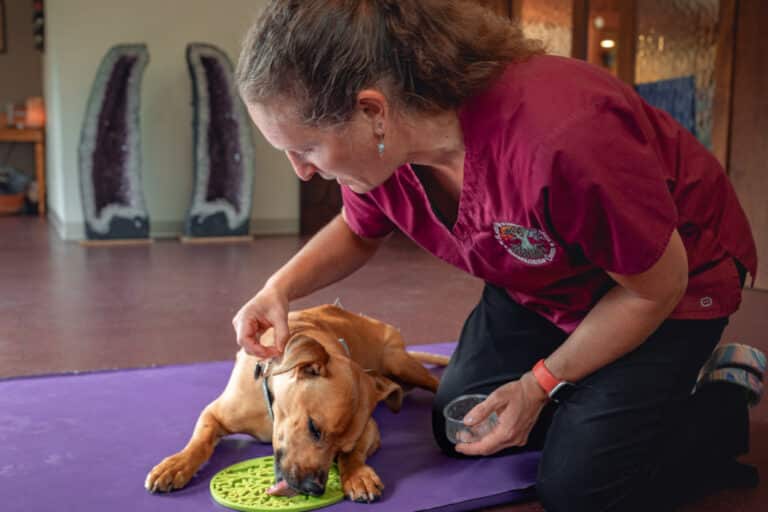
When performed by a trained veterinarian, acupuncture is a low-stress experience. The needles are far finer than the ones used for injections or blood draws, and most pets tolerate treatment well. Many relax deeply during a session, and some even doze off.
How Does It Work?
Acupuncture has traditional roots going back thousands of years, but modern veterinary medicine understands its effects primarily through the lens of the nervous system. Research suggests several mechanisms are at play when a needle is placed and gently stimulated.
First, needling prompts the body to release its own natural pain-relieving chemicals, including endorphins. Interestingly, acupuncture’s pain-relieving effect can be partly blocked by medications that block opioids — one of the clearer signs that the response is biologically real. Second, the needles stimulate sensory nerves, which can change how pain signals are processed in the spinal cord and brain. Third, needle placement encourages local blood flow to the treated area, supporting circulation.
Acupuncture’s benefits are increasingly understood and supported by science, and it remains an active area of study, increasingly supported in highly academic literature. That framing matters because it shapes realistic expectations, broadens our applications, and improves our effectiveness. This more scientifically grounded understanding of acupuncture favorably overlaps with the same principles behind our Eastern medicine, Western herbal, and manual therapy work.
What Can Acupuncture Help With?
The strongest and most consistent evidence for veterinary acupuncture is in the area of chronic pain and osteoarthritis. For older pets with stiff, achy joints, acupuncture may help improve comfort and mobility as part of a multimodal pain-management plan. The research here is very promising, particularly as an adjunct treatment that works best alongside other therapies — though it is not a guarantee that it will help.
Beyond arthritis, acupuncture is often used as part of any care plan for pets recovering from surgery or injury. Through the mechanisms of action described above, acupuncture can contribute to reducing pain and improving healing. It is also studied in the context of intervertebral disc disease (IVDD) and nerve-related conditions for its ability to improve the rate of nerve regeneration and to help maintain neuroplasticity and the functioning of the neuromuscular and nervous systems. Acupuncture is never a replacement for surgery or emergency care when those are needed.
Acupuncture’s benefits extend to a range of chronic conditions as well. A growing body of academic research points to its value in supporting pets with kidney (renal) disease, in stimulating the immune system by increasing the activity of natural killer (NK) cells, and in reducing the frequency of seizures. For companions managing these kinds of chronic conditions, acupuncture can be a highly beneficial part of an integrative care plan.
For the right patient, acupuncture can be a meaningful part of a comfort-focused plan. It also pairs naturally with many other therapies — like low level laser therapy, extracorporeal shockwave, physiotherapy, ozone therapy, herbs, and nutrition — which we often combine for pain and healing support.
What a Session Is Like
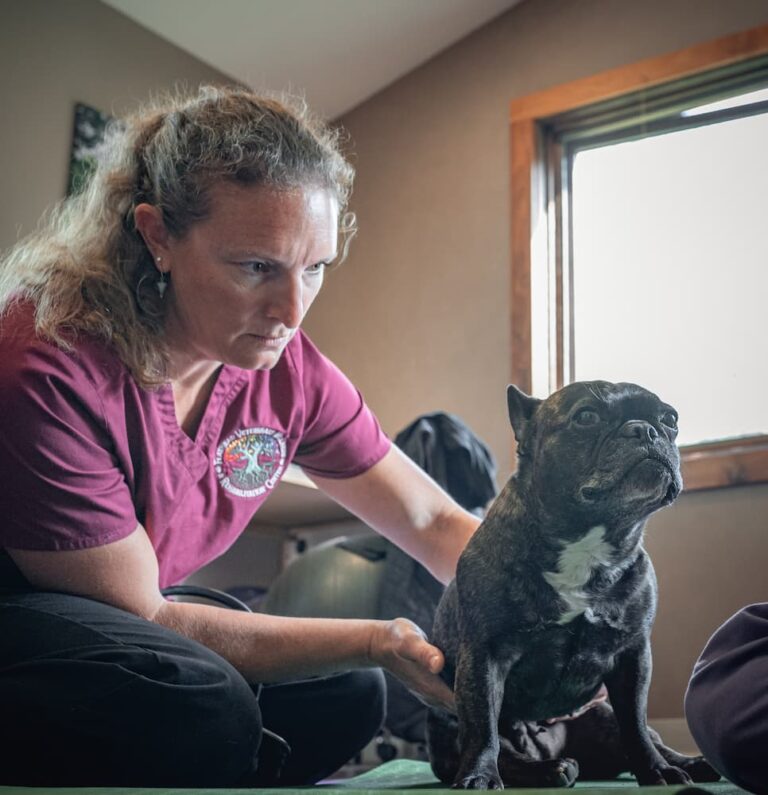
Your pet’s first visit begins with a thorough history and physical exam so we can understand the whole picture — not just the symptom you’ve noticed. We go through your pet’s lifestyle, previous medical records, diet, and overall current state of comfort and wellness. That first appointment runs longer than follow-ups, taking about an hour.
During treatment itself, needles are placed gently at selected points, and a typical session lasts about 15 to 30 minutes depending on your pet’s condition and how they respond. In some cases we may use electroacupuncture, where a mild, gentle current connects a pair of needles to provide steadier stimulation — often used for pain and certain neurological conditions. For chronic issues, pets usually start with a short series of sessions, then taper to a maintenance schedule as they improve. Most pets show a response within just a few visits.
Is It Safe? Is It Right for My Pet?
When performed by a properly trained and licensed veterinarian, acupuncture is widely considered safe, and serious side effects are rare. Many pets may experience mild, temporary effects, such as a little sleepiness or relaxation afterward. Acupuncture should always be performed by a qualified veterinary professional trained and certified in veterinary acupuncture.
There are situations that call for extra caution — pregnancy, bleeding disorders, or infected skin at a treatment site, among others — which is another reason a thorough exam and conversation come first. If you’re wondering whether acupuncture is a good fit for your companion, the best next step is a consultation where we can evaluate your pet as an individual and talk about whether it’s likely to help.
How It Fits Alongside Your Primary Vet
Flathead Veterinary Wellness & Rehabilitation Center is the only integrative holistic veterinary rehabilitation center in Northwest Montana, and we see ourselves as a specialized partner in your pet’s care — not a replacement for your full-service veterinarian. We’re an appointment-only wellness and rehabilitation practice, and we work best when we collaborate with the vet who handles your pet’s routine and emergency needs. Think of us as an added member of your companion’s medical team, focused specifically on comfort, mobility, and whole-body wellbeing.
Frequently Asked Questions
Does acupuncture hurt my pet?
Most pets tolerate it very well. The needles are extremely thin, and many animals relax or even fall asleep during a session. Some points may be a little more tender or reactive than others, but we can make adjustments as needed to ensure a comfortable and effective treatment.
How many sessions will my pet need?
It varies by condition. Chronic issues often begin with a short series of visits before tapering to maintenance, while some pets respond within a few sessions. We’ll tailor a plan to your pet after an initial evaluation.
Is acupuncture a substitute for my regular vet or for surgery?
No. Acupuncture is a complementary therapy used alongside conventional care. We always recommend maintaining a relationship with a full-service veterinarian, and we never delay treatments your pet genuinely needs.
Which pets are good candidates?
Pets with arthritis, chronic pain, or mobility challenges, and those recovering from surgery or injury, are among the most common candidates. Other chronic conditions — like kidney disease, cancer, and seizure disorders, or any chronic condition that requires healing — may be candidates too. A consultation is the best way to find out if it’s right for your companion.
Curious Whether Acupuncture Could Help Your Companion?
Our team would be glad to talk through your pet’s needs and whether acupuncture — on its own or as part of a broader wellness plan — might be a good fit. We’re an appointment-only practice serving the Flathead Valley and Northwest Montana.
5819 US-93, Whitefish, MT 59937
co*****@*****************ss.com
This article is for educational purposes and is not a substitute for professional veterinary diagnosis or treatment. Always consult your veterinarian about your pet’s individual health. For further reading, see the
American Veterinary Medical Association, the AAHA Pain Management Guidelines, the UC Davis Integrative Medicine Service, the International Veterinary Acupuncture Society, and peer-reviewed research indexed on PubMed.


Join Our Wellness Community!