

If your pet is managing chronic pain, recovering from surgery, or slowing down with age, NSAIDs are often the first tool veterinarians reach for. And for good reason — they can be effective. But they’re not the only option, and for many pets, they’re not the complete answer.
Long-term NSAID use carries real considerations: potential impacts on kidney and liver function, gastrointestinal sensitivity, and the fact that they treat the symptom of pain without necessarily addressing its underlying causes. Many pet owners come to us asking exactly this question: “Are there other options?”
The answer is: absolutely. Flathead Veterinary Wellness & Rehabilitation Center specializes in pain and mobility, and we approach each patient with a full multimodal treatment philosophy — meaning we draw from a wide range of evidence-informed therapies to support your companion’s comfort, function, and quality of life.
Here’s a look at some of the options we discuss with pet owners every day.
Acupuncture: Tapping Into the Body’s Own Pain Response
Veterinary acupuncture works by stimulating specific anatomical points to trigger the body’s natural pain-relief pathways — including the release of endorphins and other neurotransmitters. It can also help reduce inflammation, improve circulation, and support nervous system function.
Acupuncture is commonly used alongside — and sometimes in place of — pharmaceutical pain management for conditions like arthritis, intervertebral disc disease, hip dysplasia, and post-surgical recovery. Sessions typically take 20–40 minutes, and most pets tolerate them remarkably well. Many experience a calm, almost drowsy state within minutes of the needles being placed.
It’s worth noting that acupuncture is not a cure — but as part of a broader treatment plan, it can make a meaningful difference in how a pet feels and moves day to day.
Laser Therapy & Shockwave Therapy: Light and Sound in Service of Healing
Two of the more technology-forward options we offer are Low Level Laser Therapy (photobiomodulation) and Shockwave Therapy (Piezowave Vet).
Low Level Laser Therapy (LLLT) uses light energy to stimulate cells, boost ATP production, and promote faster tissue repair. It’s particularly useful for wound healing, inflammation, and chronic pain conditions. Sessions are short, painless, and drug-free.
Shockwave Therapy delivers focused high-pressure sound waves to damaged tissues, promoting healing and pain reduction at the site. It’s well suited to tendon and ligament injuries, osteoarthritis, hip and elbow dysplasia, and back pain. Most patients respond within 1–3 treatments.
Neither of these therapies requires sedation or anesthesia, and both are commonly used as standalone treatments or in combination with other modalities.
Rehabilitation Therapy & Hydrotherapy: Building Strength to Reduce Pain
Pain often creates a difficult cycle: it limits movement, which leads to muscle weakness and joint instability, which creates more pain. Veterinary rehabilitation therapy addresses this cycle directly.
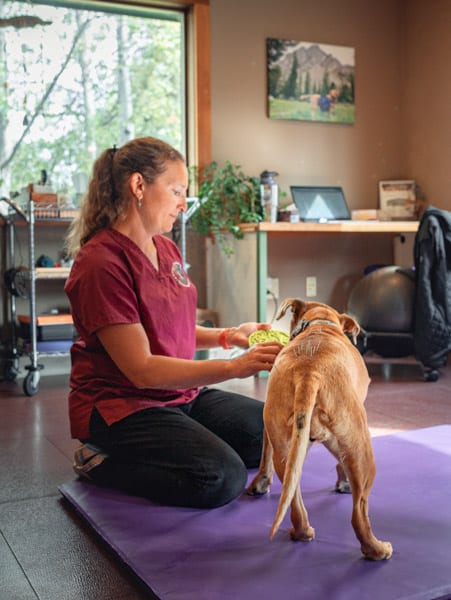
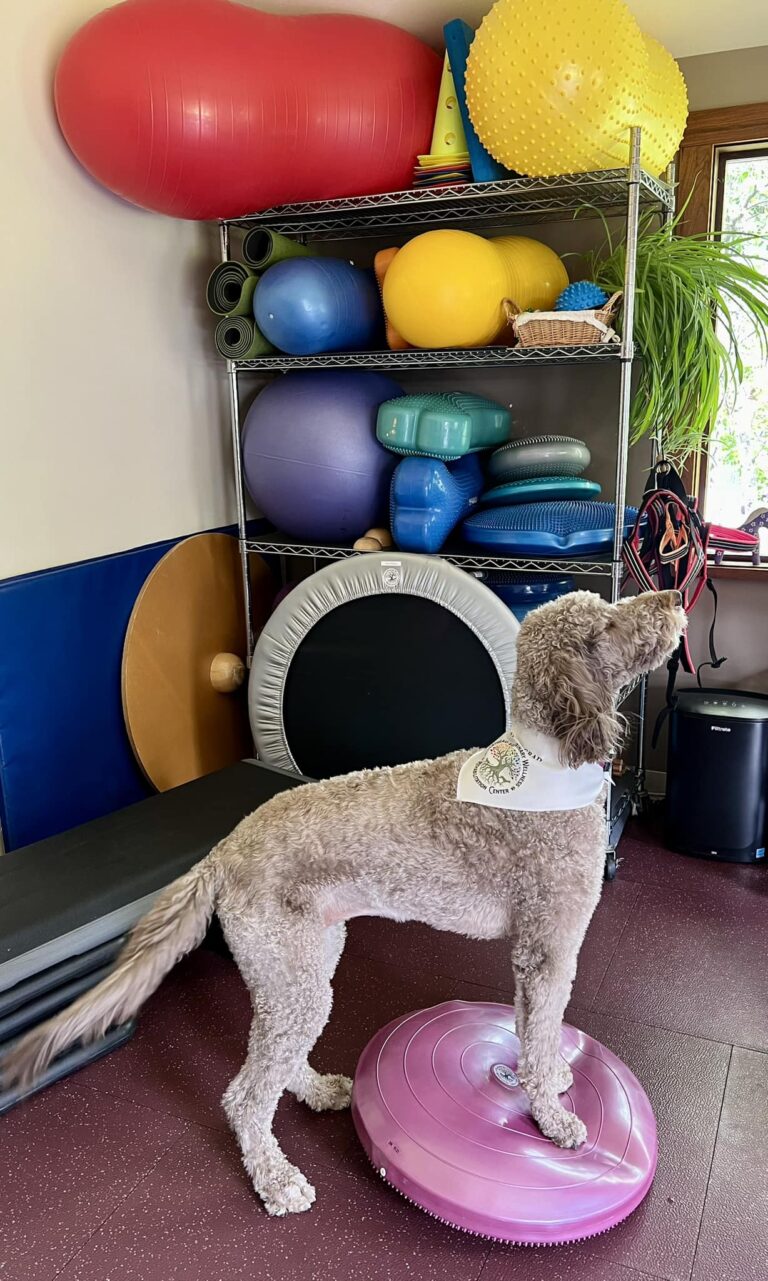
Our certified rehabilitation therapists design individualized programs using therapeutic exercises, manual therapy, and targeted conditioning — all in our Mountain Gym with non-slip flooring built for patient safety. We also provide customized home exercise plans to extend the benefits between visits.
Our underwater treadmill (hydrotherapy) is a particularly valuable tool. The buoyancy of the heated, UV-filtered water reduces the load on joints while still providing resistance for muscle strengthening. It’s excellent for post-surgical recovery, arthritis management, neurological rehabilitation, and weight management — and many pets come to love it.
Massage, Myofascial Release & Chiropractic Care: Hands-On Relief
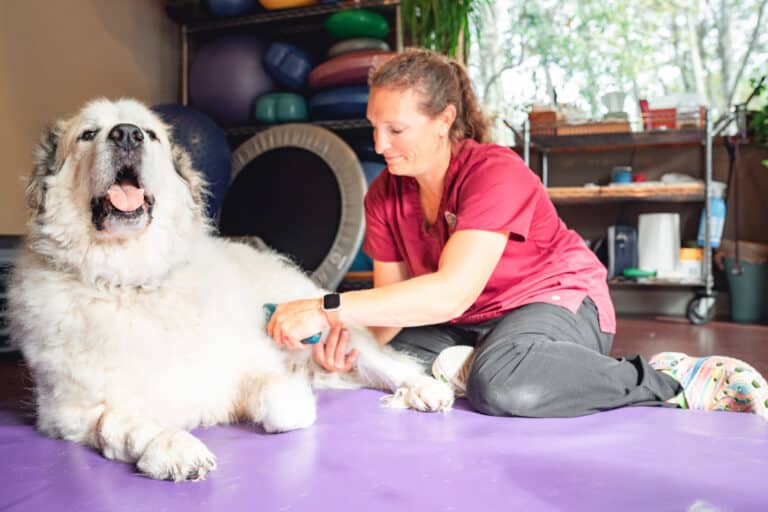
Manual therapies are often underestimated in veterinary care. Massage therapy — including myofascial release, trigger point therapy, and craniosacral bodywork — addresses pain at the level of the muscles, connective tissues, and nervous system. These approaches can reduce muscle tension, improve circulation, restore range of motion, and ease the chronic compensatory patterns that develop when a pet favors an injured or painful area.
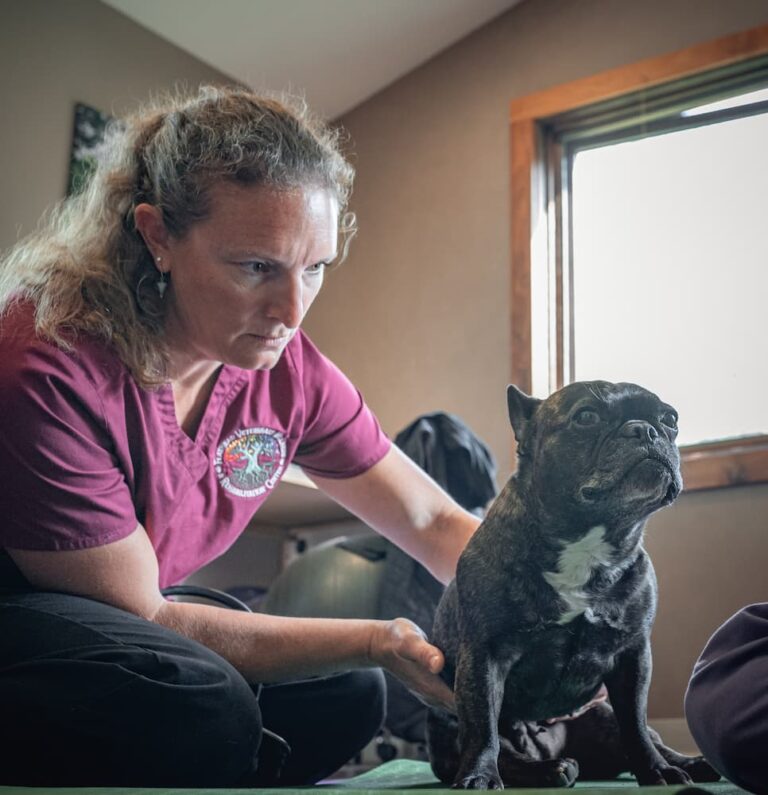
Veterinary chiropractic and spinal mobilization, offered by Dr. Sara Clark, focuses on restoring proper alignment and movement to spinal joints. Misalignments can contribute to pain, nerve dysfunction, and restricted mobility — and addressing them can have effects that extend well beyond the spine.
These therapies are gentle, non-invasive, and often deeply relaxing for patients. They are frequently woven into broader treatment plans rather than used in isolation.
Ozone Therapy & PEMF: Supporting Healing at the Cellular Level
For pets with chronic inflammatory conditions, two additional modalities are worth knowing about:
- Ozone Therapy uses medical-grade oxygen in an energized form (O3) to target oxidative stress, one of the root drivers of many inflammatory conditions. It can be administered in multiple ways depending on the area being treated.
- Pulsed Electromagnetic Field Therapy (PEMF) uses magnetic pulses to promote cellular detoxification and stimulate the body’s natural healing mechanisms. It’s noninvasive, painless, and can be especially useful for arthritis, post-surgical recovery, and chronic pain.
Both therapies work at the cellular level, supporting healing rather than simply masking pain signals.
Nutritional Support: What Your Pet Eats Matters
Pain management isn’t only about what you do during an appointment. Diet and nutrition play a meaningful role in inflammation, joint health, and overall resilience. Our nutritional consultations are tailored to each pet’s specific needs, health conditions, and constitution — drawing from both western nutritional science and eastern food therapy principles.
We also offer comprehensive diagnostics — including OmegaQuant fatty acid testing, microbiome analysis, and tissue mineral analysis — that help identify nutritional factors that may be contributing to chronic inflammation or pain.
What “Multimodal” Actually Means for Your Pet
The most important thing to understand about pain management at our center is that we don’t approach it as a menu of individual treatments to try one at a time. We approach it as a conversation.
Every patient is assessed as an individual — their history, their condition, their temperament, their lifestyle, and their response to treatment over time. From there, we work with you to build a plan that draws from the most relevant tools available, adjusting as your pet progresses.
In some cases, that plan may still include NSAIDs — perhaps at a lower dose, or on a different schedule, supported by therapies that address what NSAIDs alone cannot. In other cases, it may not include them at all. The goal is always what’s best for your specific companion.
We also work alongside your primary veterinarian — not as a replacement, but as a specialized partner in your pet’s care.
Wondering What Options Might Be Right for Your Pet?
If you’re looking for a more complete picture of what pain and mobility support can look like for your companion, we’d love to talk. A holistic consultation gives us the opportunity to understand your pet’s full history and discuss the range of options that may be most useful for them.
Call or text (406) 407-1735 • Email [email protected] • Book online at flatheadvetwellness.com
Appointment-only practice located in Northwest Montana. We see patients from across the state and region. Please use one method of contact and allow up to 24 hours for a response.

Join Our Wellness Community!